
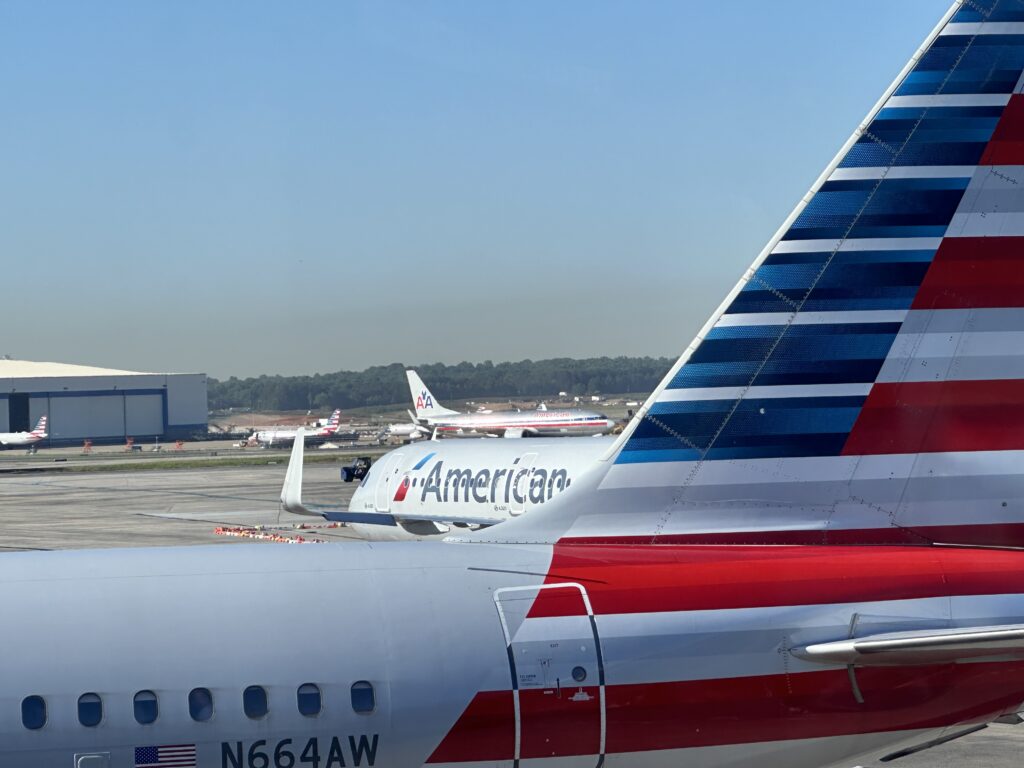
American Airlines is making significant operational changes at Dallas Fort Worth International Airport, its largest and most important hub. The airline says the updates are designed to improve schedule reliability, customer connections, and overall performance across its network.
DFW plays a central role in American’s operation, handling more than 30 percent of the airline’s daily connecting passengers and checked bags. With nearly 700,000 customers traveling through the airport each day, performance at DFW has a direct impact on the airline’s systemwide reliability. In response, American is restructuring how flights are scheduled and how the airport functions operationally.
A key change is the shift from a nine-bank to a 13-bank schedule structure. Banked schedules group arrivals and departures into defined time periods to support connections. By spreading flights across more banks throughout the day, American aims to reduce congestion, improve on-time performance, and offer customers more balanced departure options. The updated structure is scheduled to take effect beginning in April and is already visible in published schedules.
According to the airline, the revised schedule is designed to reduce early-morning departures, improve connection times, and create more consistent travel windows for passengers. The changes are intended to benefit both connecting travelers and those starting or ending their trips in Dallas–Fort Worth.
Another major focus of the update is block time, which refers to the scheduled time from gate departure to gate arrival. American is increasing block times across parts of its network to better reflect real-world operating conditions. The goal is to improve on-time arrival performance, reduce delays, and provide a more predictable travel experience.
The airline is also adjusting its connection strategy at DFW. While short connection times will still be available for travelers who prioritize speed, the new schedule reduces the number of extremely tight connections. This approach is intended to lower misconnection rates and improve the reliability of checked baggage transfers. American says the changes should also result in better bag delivery performance, including more bags arriving on time or ahead of passengers.
Operational resilience is another major focus. Weather disruptions, particularly thunderstorms in North Texas, have historically affected DFW operations. American says the revised schedule will help the airline recover more quickly when disruptions occur by reducing congestion and improving aircraft flow through the airport. Additional investments in remote deplaning equipment and staffing are also aimed at minimizing diversions and improving recovery during irregular operations.
Beyond scheduling, American continues to invest in DFW’s physical infrastructure. Projects underway or planned include terminal expansions, additional gates, and the future development of Terminal F, which will add new widebody gates, modern baggage systems, and expanded customs facilities. The airline is also working with airport and government partners to streamline security and arrival processes, including expanded use of biometric identity verification and enhanced international arrival procedures.
Taken together, these changes represent a broad effort to reshape how American operates at its largest hub. Rather than increasing flight volume alone, the focus is on reliability, operational efficiency, and a more predictable customer experience. As the changes roll out over the coming months, their impact will likely be most noticeable in connection quality, on-time performance, and overall flow through one of the busiest airports in the world.
Analysis
Overall, this news is a positive development, though it would be encouraging to see American Airlines apply similar changes at other major hubs such as Charlotte Douglas International Airport (CLT), which is well known for tight connection windows, or Chicago O’Hare International Airport (ORD), which in recent years has developed a reputation similar to Newark in terms of congestion and operational challenges.
It will be interesting to see whether reliability at Dallas–Fort Worth International Airport (DFW) meaningfully improves as these changes are implemented. Larger metropolitan hubs are likely to benefit the most from the expanded banking structure, while smaller markets with lower demand may see little change in flight frequency or connectivity.
One notable element of the plan is American’s decision to increase block times. This raises questions about how the additional time will affect crew scheduling, given strict duty time limitations. That said, padded schedules often lead to more consistent on-time arrivals, which can improve the overall customer experience.
Separately from this announcement, American does appear to have improved its communication around delays, both in terms of earlier notifications and more accurate time estimates. While there is still room for improvement, this represents meaningful progress.
It will also be interesting to see how HEAT, American’s automated flight scheduling and recovery tool for severe weather, integrates with the new schedule structure. If executed well, it could further improve recovery during irregular operations.
Overall, this appears to be a constructive step forward, though many of the real outcomes will only become clear over time. By Fall 2026, there should be a much clearer picture of how effective these changes are across the network.
Happy Holidays and Happy New Year!
AA makes DFW work in the rain. the problem is no AA, the problem is the FAA control Tower. DFW has 7 runways and when it rains the FAA control Tower will use only 2 runways and sometimes only 1. This is the reason why DFW has issues in the rain. Other hubs can function but the dysfunctional FAA control tower is the problem.
American can’t make anything work. When half of the employees, or more, don’t give a darn you aren’t making anything work.